Composition
Why Black and White
Most of this set is shot on black and white, Ilford HP5 and Kentmere Pan 200. Taking colour out of the equation forces the eye onto light and structure instead, dark against light rather than colours working together, which gives a tighter set of constraints to actually think about composition.
Waiting for the Frame
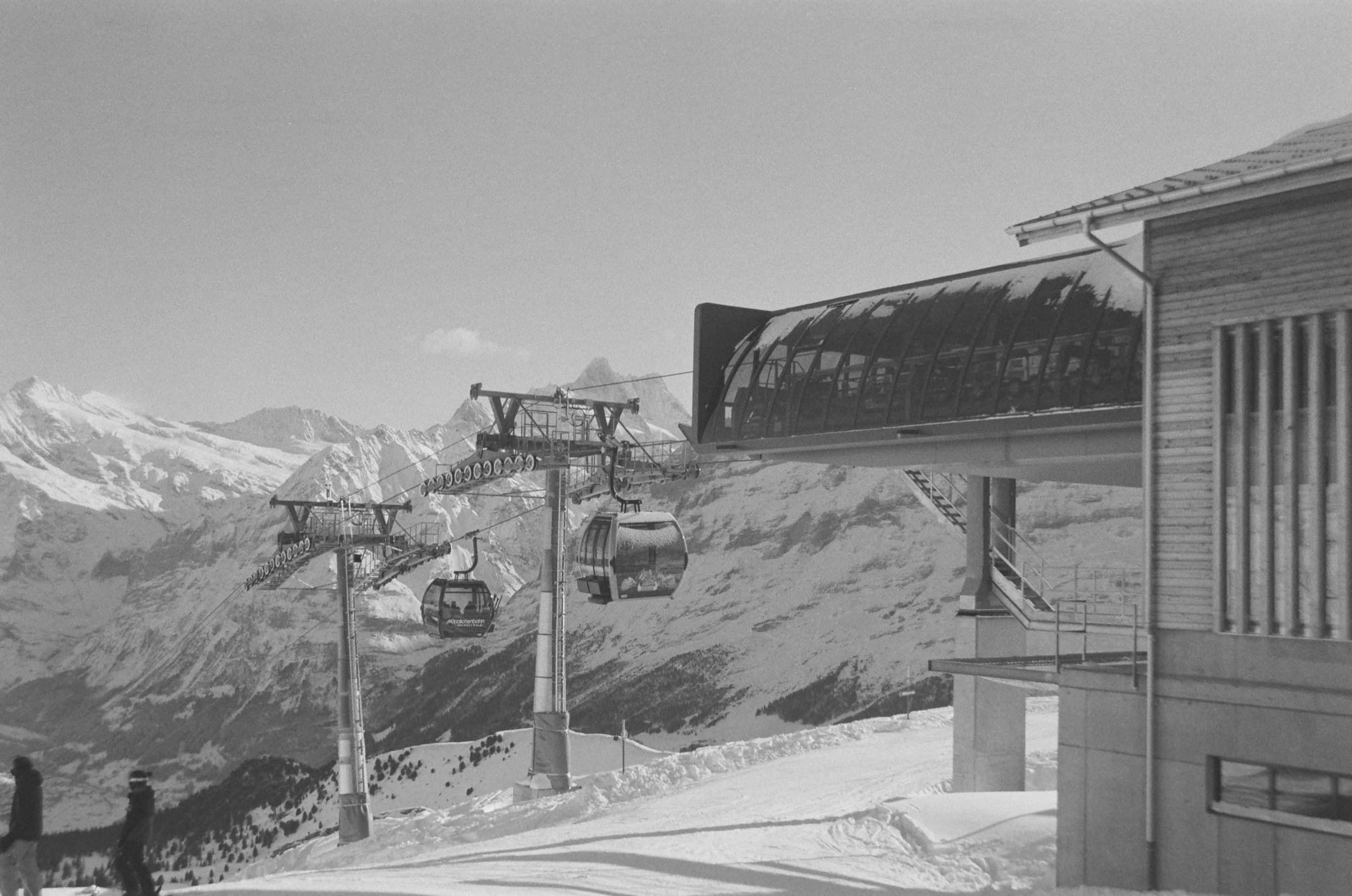
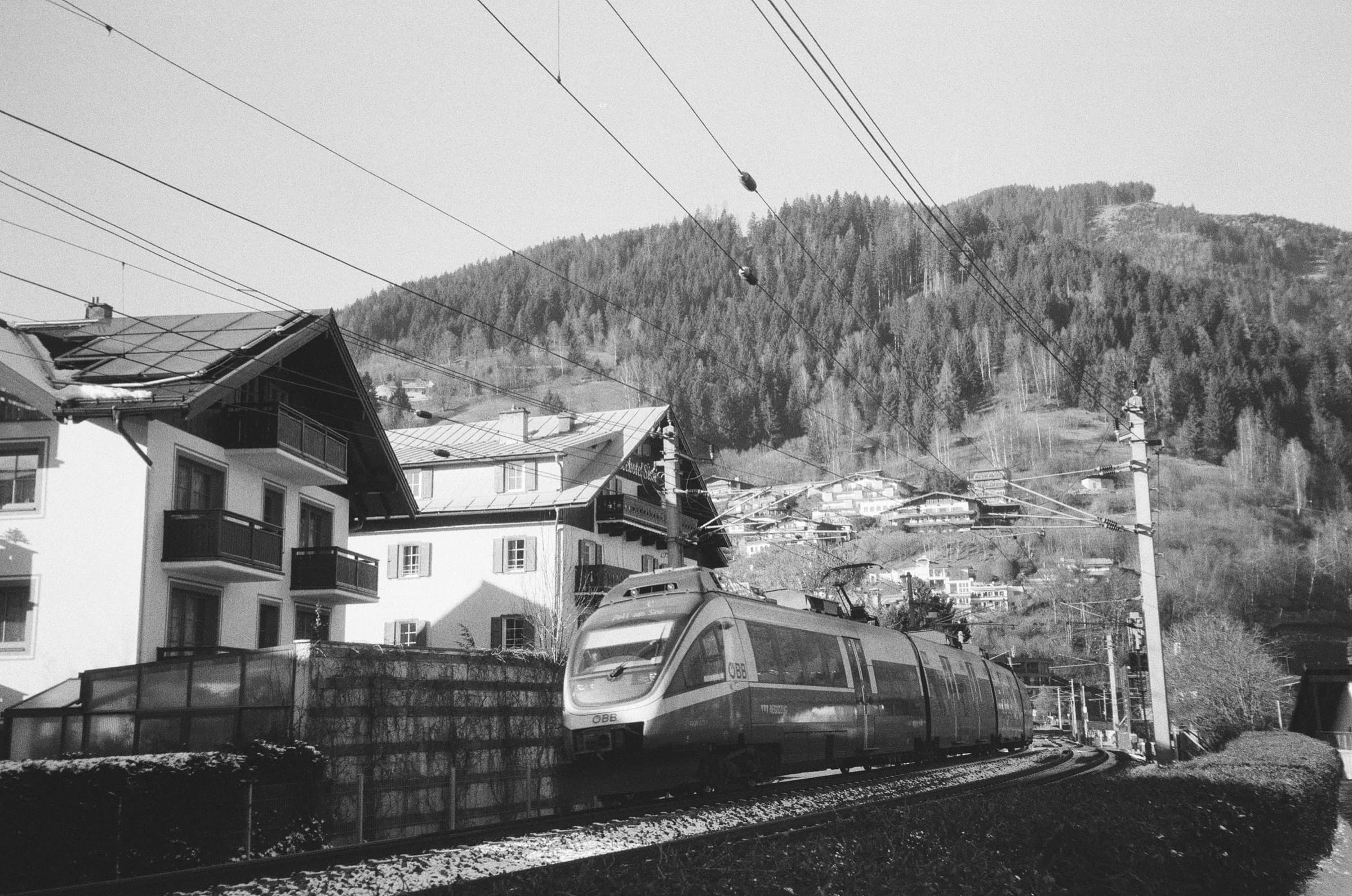
In Austria, on Kentmere Pan 200, I caught two modes of transport, a cable car and a train, both requiring a wait for the vehicle to pass through frame. That meant composing the shot before the subject even arrived rather than reacting to it.
Thirds, Without Trying Too Hard
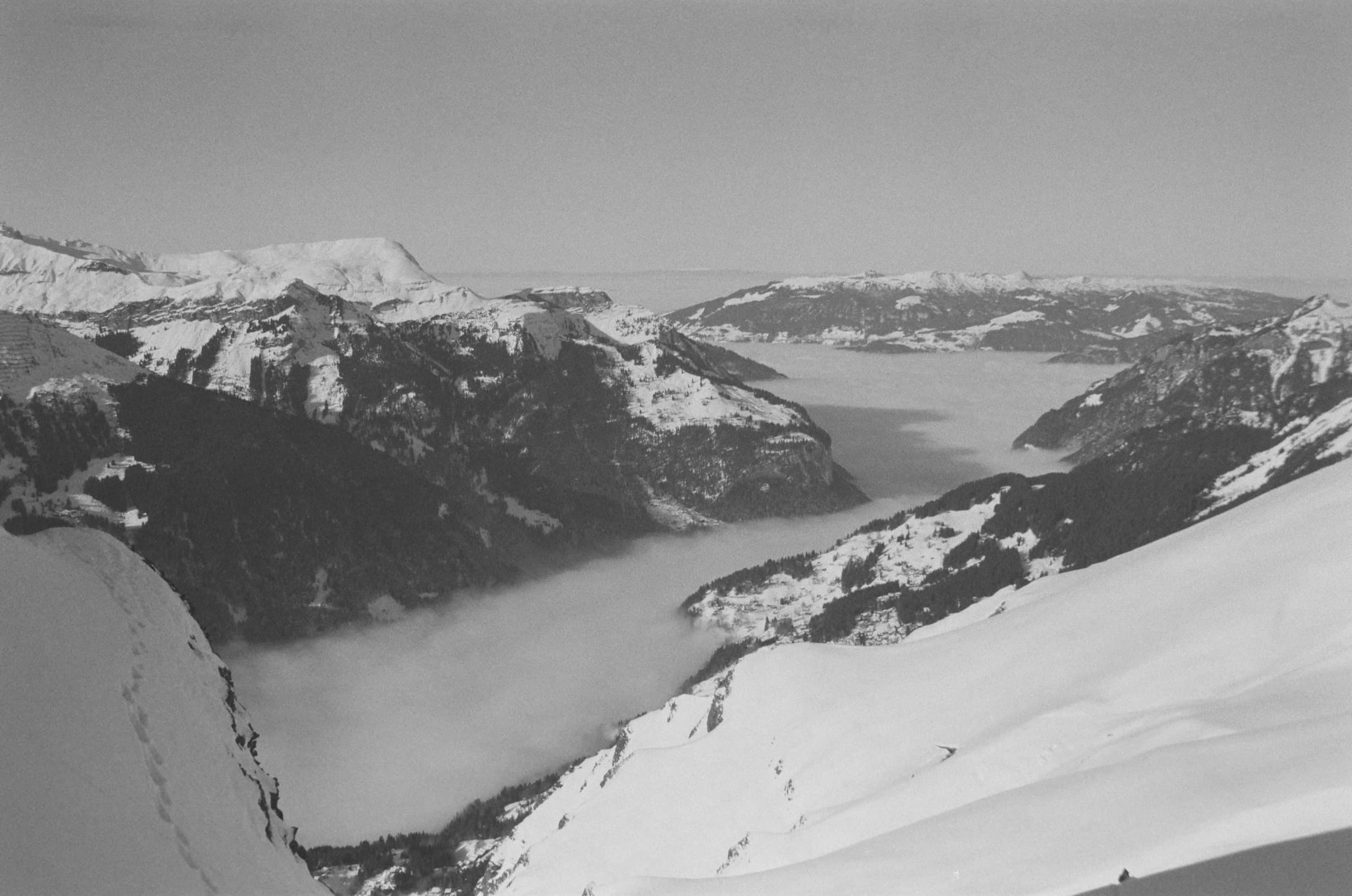
The Swiss valley shot, also on Kentmere Pan 200, splits into three naturally: snow on the mountain I was standing on along the bottom third, the opposite side of the valley and pooling cloud through the middle, and sky across the top. The bubble car shot works differently, drawing the eye away into the distance like a leading line.
Stacking the Frame
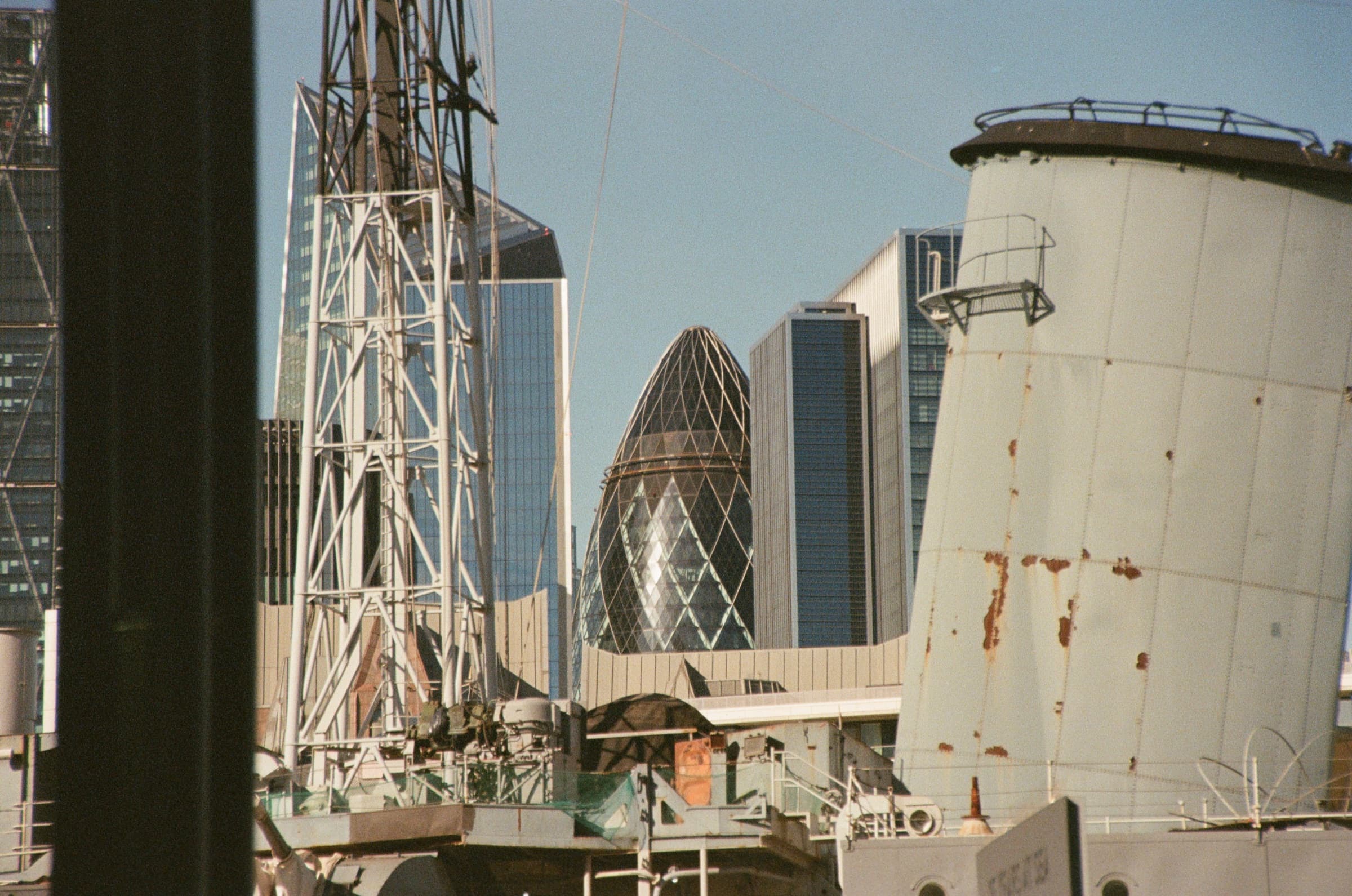
The Gherkin shot is the odd one out, in colour on Fujifilm 200 rather than black and white, and one of the more recent images in this set. It's built on stacked foreground, midground, and background, leading from HMS Belfast on the Thames through to the Gherkin itself.