Pontus — Autonomous Ocean Plastic Capture Vessel
Tools & Software
Concept Generation
Control Systems
Sensor Integration
CAD
Data Analysis
LaTeX
Problem
Existing ocean plastic collection sits at the extremes of scale: enormous crewed systems like The Ocean Cleanup at one end, marina-sized devices like the Seabin at the other. The gap is a solution that scales by adding units. Pontus was designed to fill it: a vessel that collects surface plastic autonomously and gains capacity as part of a swarm. The project wasn't on the standard list, so I proposed it myself, giving the university lead time to arrange supervision across nautical and electromechanical engineering.
Process
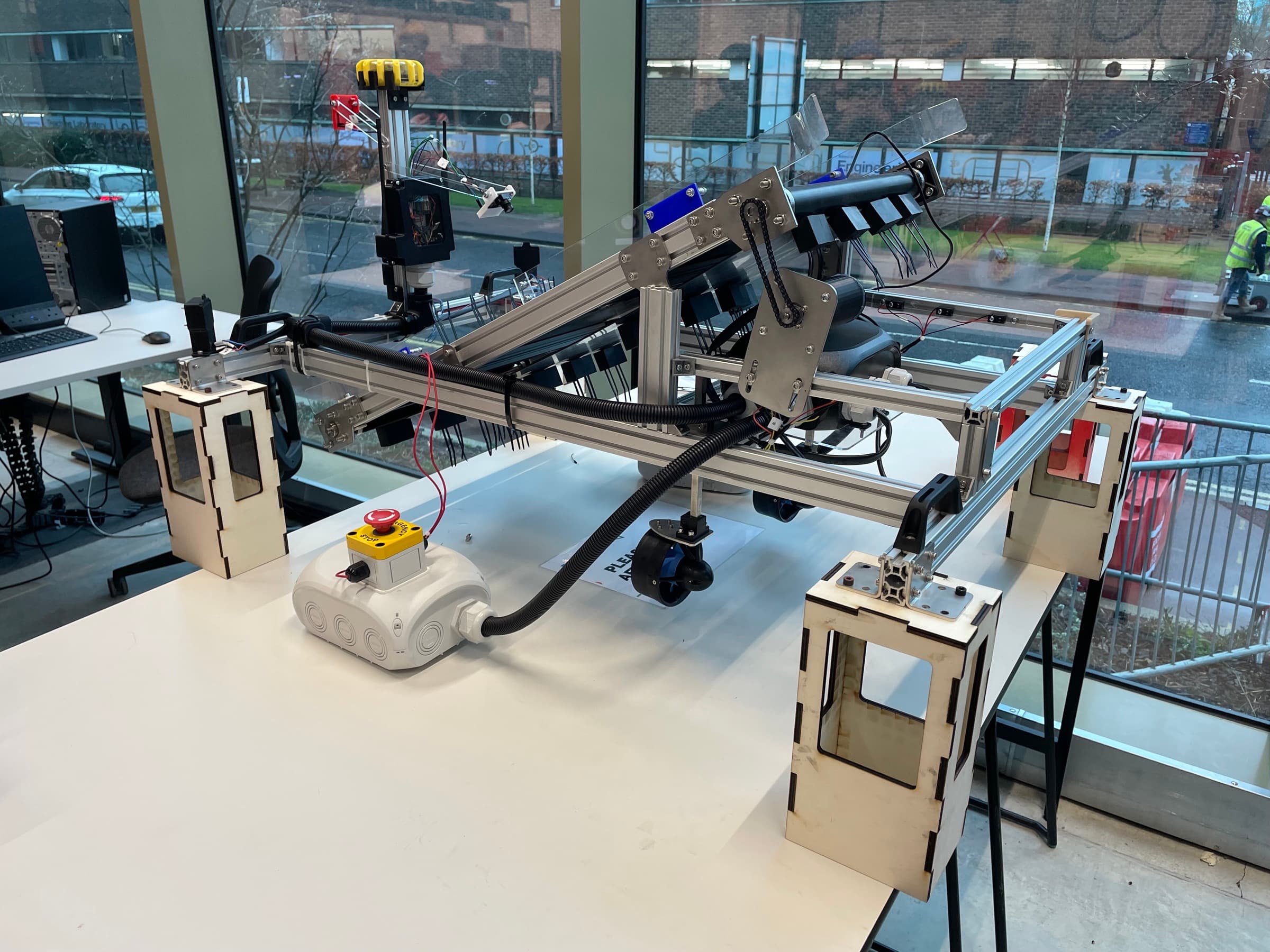
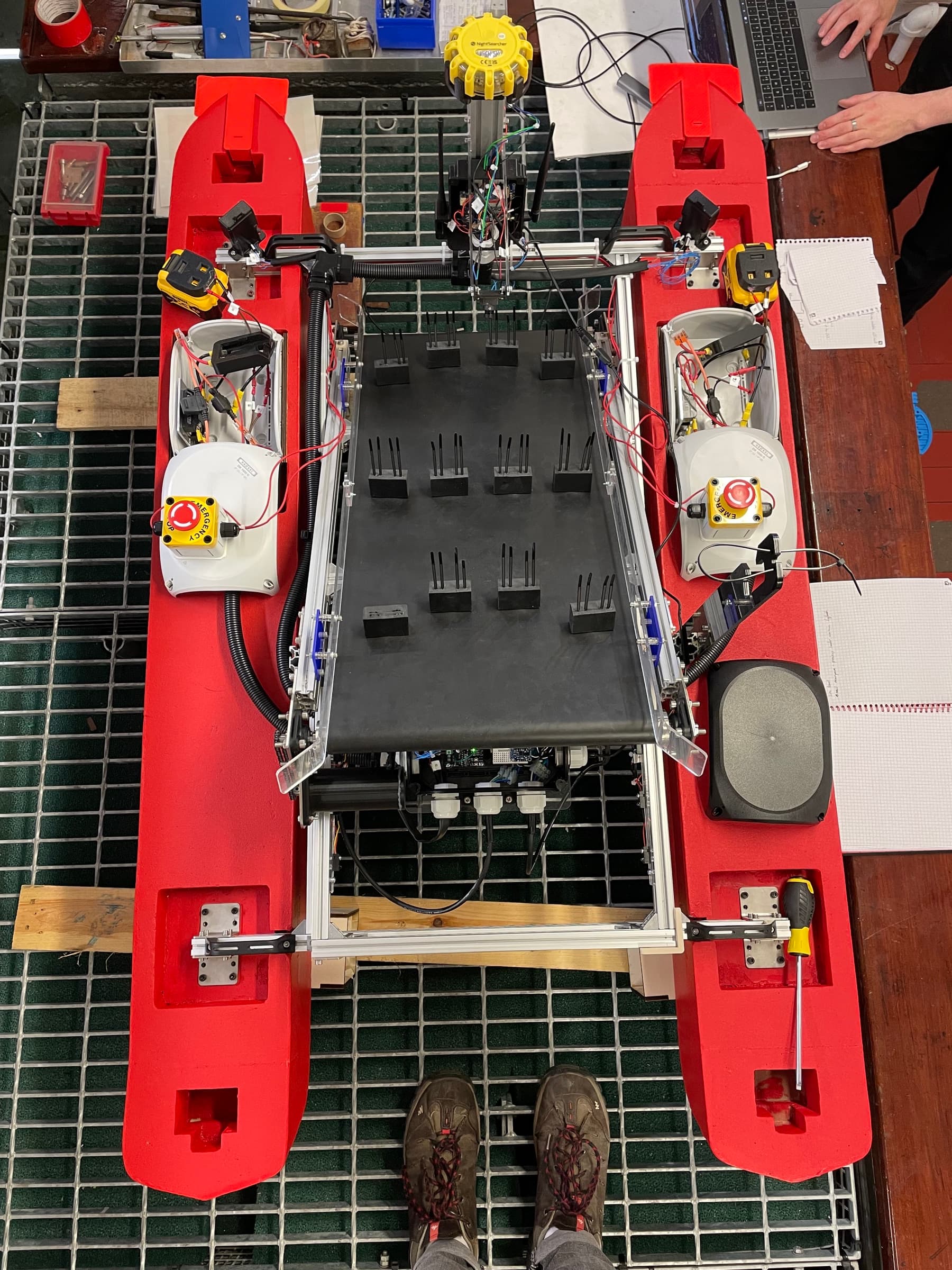
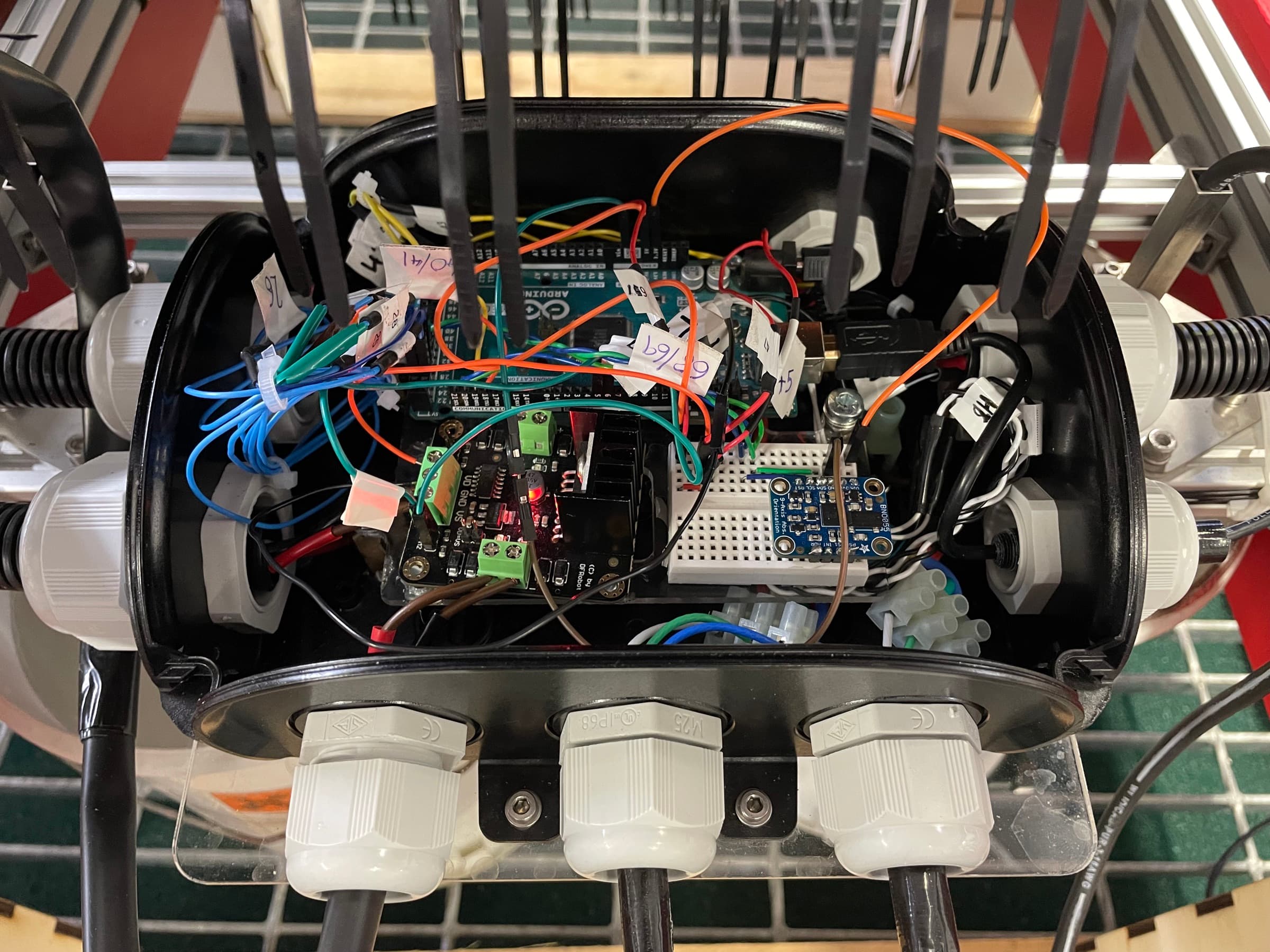
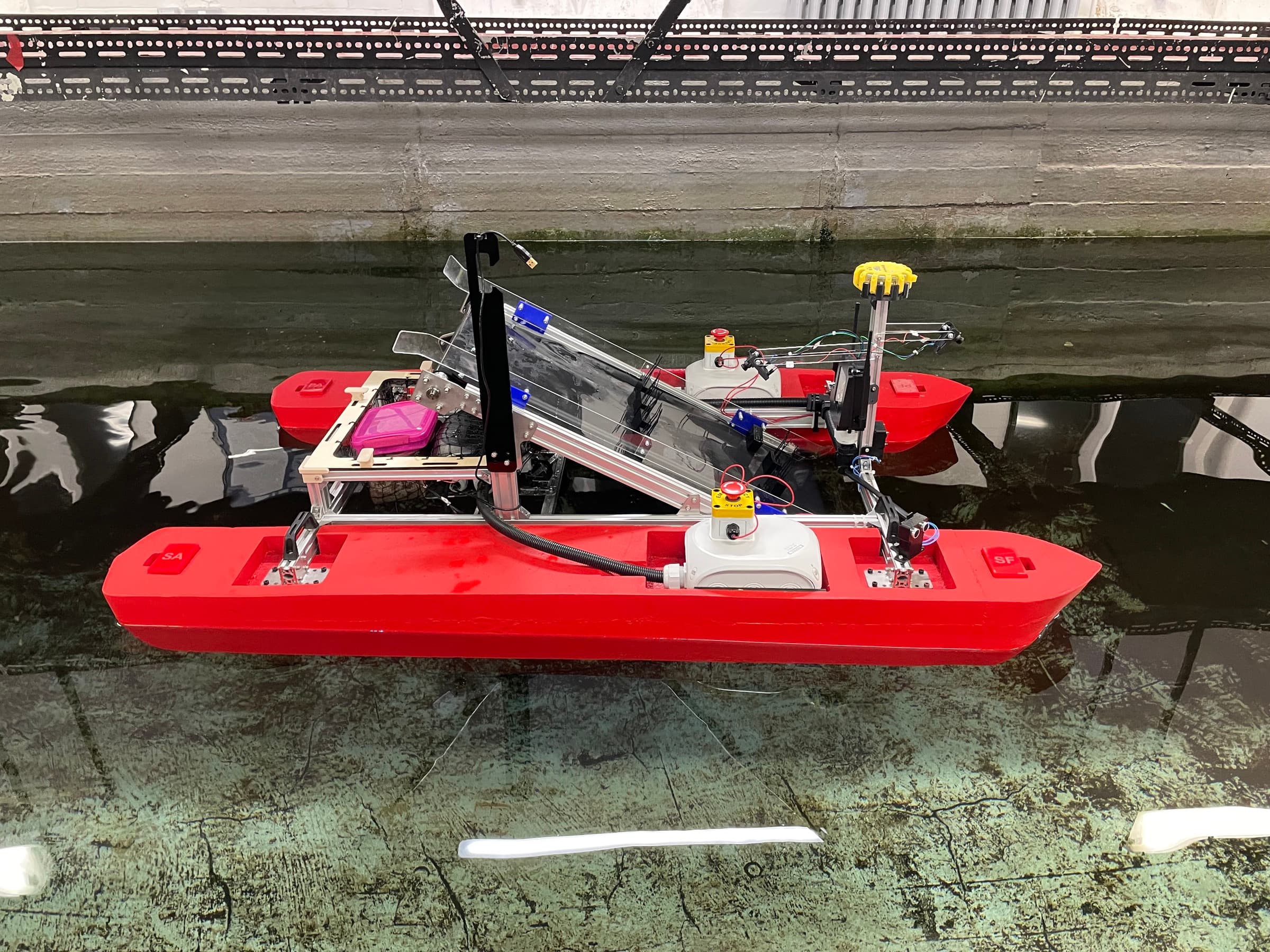
I led the six-person team through the full development cycle, from concept generation using morphological analysis to design, manufacture, and testing. The final design combined a catamaran hull form, a cleated conveyor belt for collection, thruster propulsion, and an aluminium extrusion superstructure. Within that, my own hands-on work centred on the conveyor, which I took over to get working reliably, and I co-developed the control system: a two-level finite state machine, with a primary machine handling operational modes and a secondary machine running the autonomous behaviour from sensor and timer inputs, plus OpenMV cameras using colour recognition to distinguish plastic from marine life and reduce bycatch. Rather than the usual single prototype delivered at year end, the team had a rough working prototype ready by February, which opened up a second design phase: acting on test results with fixes and quality-of-life improvements before delivering a second, refined version of the prototype. Testing ran throughout in the Marine School's Hydro Labs, validating stability, speed, state transitions, and collection performance against the specification.
Outcome
The vessel transitioned reliably between states from live sensor data, demonstrated bycatch reduction through camera input, and ran three times faster than the specification speed, with thrust capped at 60% power to keep the bows above water. The final specification success rate was 77%, and the project was awarded best thesis project in the School of Engineering.