Railway Bogie Dynamics Simulation
Tools & Software
MATLAB & Simulink
Data Analysis
Problem
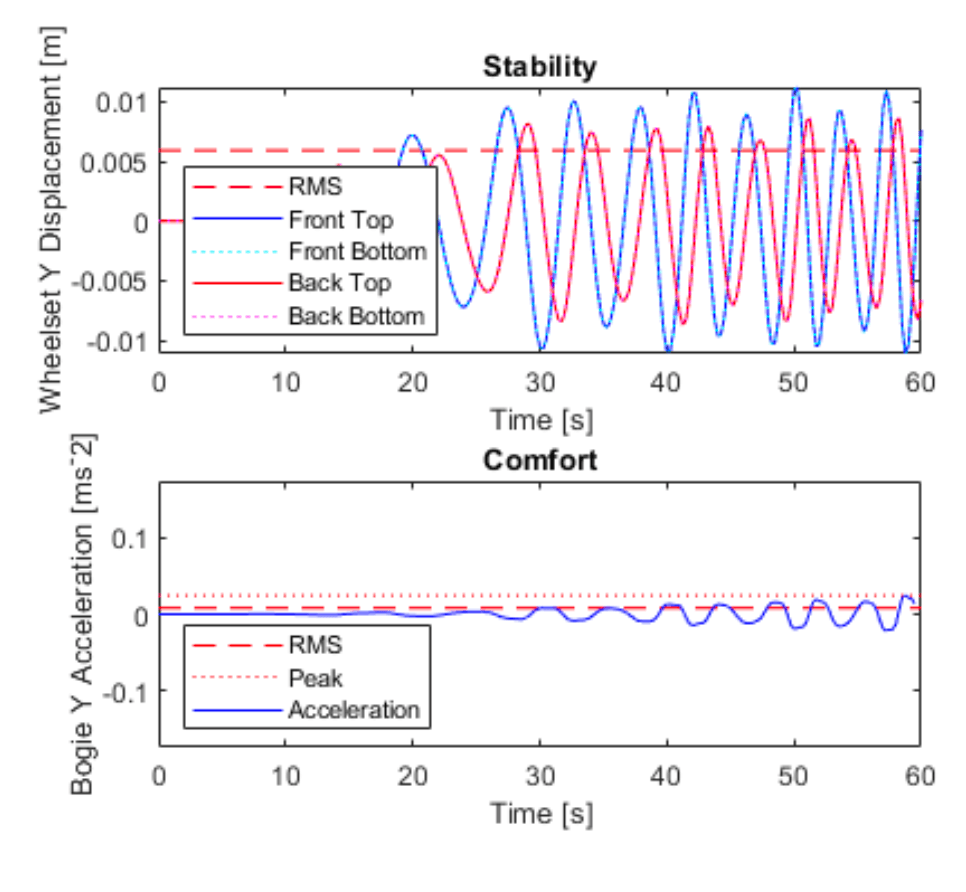
Railway bogie geometry drives whether a vehicle hunts, the lateral oscillation that damages track and can derail a train, and how its motion is perceived by passengers. The coursework required more than running a simulation: it needed single numerical metrics for stability and comfort so that competing bogie designs could be compared directly, and an optimised design driven by the resulting data.
Process
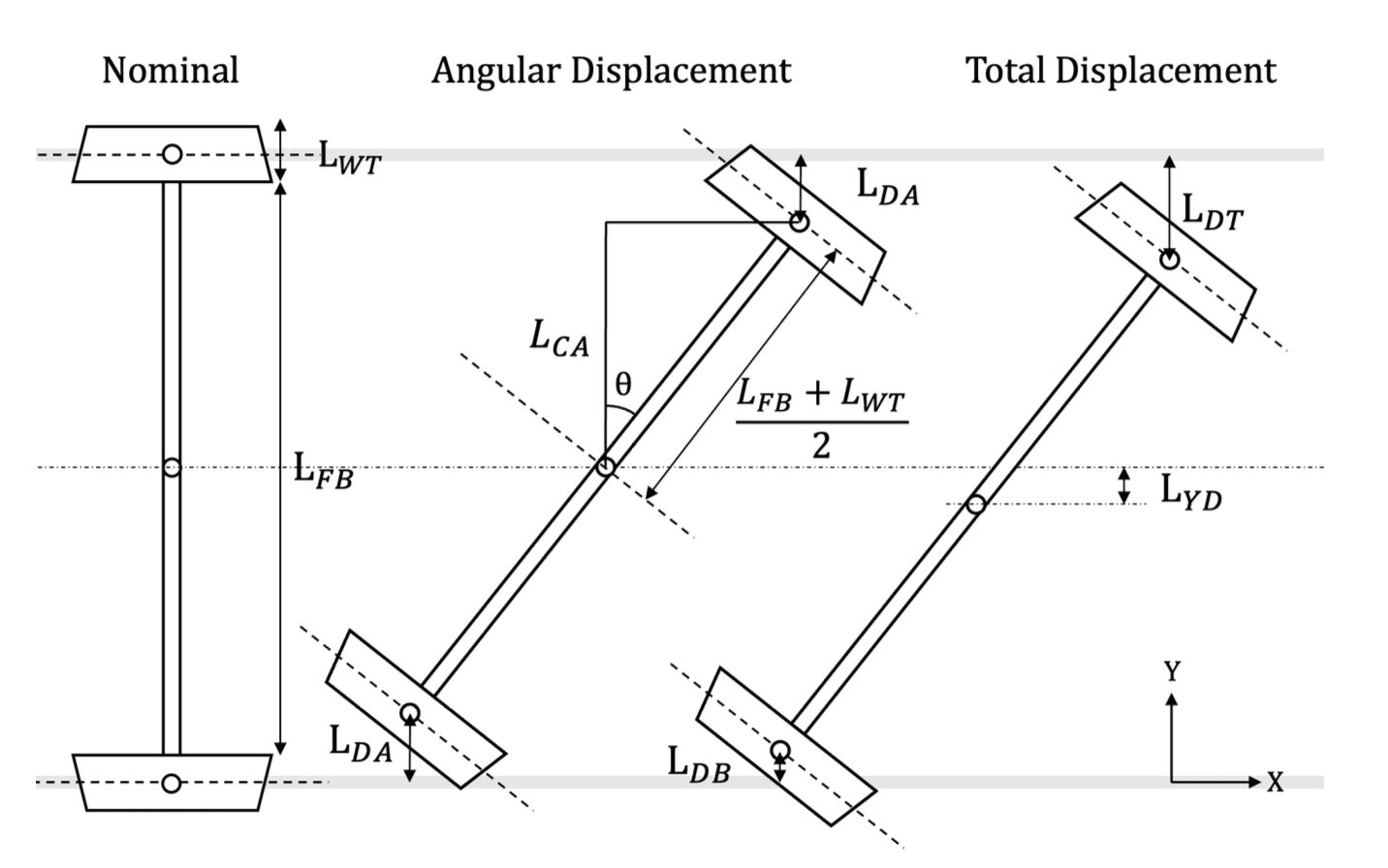
An Excel front end converted driving parameters, including wheelset neutral diameter, conicity, wheelbase, and beam dimensions, into the driven properties the simulation needed: mass and moment of inertia, derived from first-principles cone and beam geometry. A MATLAB script simulated the wheelset and bogie motion along the track, and a second analysis script differentiated the positional data through velocity and acceleration to jerk. Stability was quantified as the worst-wheel RMS lateral displacement, combining lateral and angular wheelset motion. Comfort combined the mean acceleration magnitude with crest factors of acceleration and jerk, drawing on ISO 2631-1's treatment of perceived vibration. Parameters were then varied one at a time to isolate each trend across geometry and spring stiffnesses.
Outcome
The sweeps produced clear, quantified trends: cross-brace stiffness gave the largest stability improvement, and neutral diameter had the largest effect on comfort. The final output was an optimised bogie with separate spring configurations for stability and comfort, the comfort option retaining most of the stability benefit. The project was awarded a first.